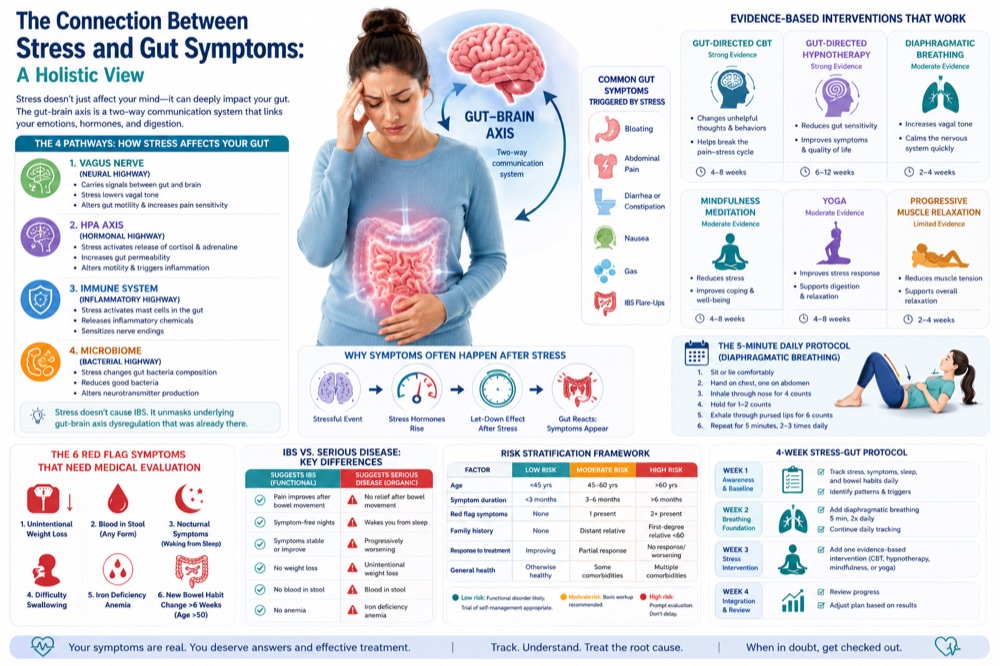
ลำไส้และสมองพูดคุยกันตลอดเวลา เมื่อช่องดังกล่าวมีเสียงดัง ความชัดเจนมักจะลดลงก่อน
ผู้อ่านมักคาดหวังอาหารตัวร้ายหนึ่งอย่าง การตรวจวิเศษ หรืออาหารเสริมที่อธิบายทุกอย่าง ความก้าวหน้าที่แท้จริงมักเงียบกว่านั้น
เป้าหมายไม่ใช่รูทีนสมบูรณ์แบบ แต่เป็นแผนที่ทำซ้ำได้สองสัปดาห์ หากอาการต่อเนื่อง ให้เก็บบันทึกคุยกับแพทย์ได้
สิ่งสำคัญก่อน
บทความหลายชิ้นกระโดดไปแก้ก่อนอธิบายกลไก ทำให้ผู้อ่านทดลองโดยไม่รู้ว่าความสำเร็จหน้าตาเป็นอย่างไร
จุดเริ่มต้นที่ดีกว่าคือ: เข้าสู่ระบบหน้าต่างหมอกด้วยอาหาร การนอนหลับ และอุจจาระเป็นเวลา 14 วันก่อนไล่ตาม nootropics
- หมอกหลังมื้ออาหารสามารถติดตามรูปแบบของกลูโคส SIBO หรือฮิสตามีนได้
- หมอกยามเช้ามักชี้ไปที่ภาวะการนอนหลับหรือภาวะหยุดหายใจขณะหลับ
- อาการอักเสบและอาการทางเดินอาหารมักเดินทางร่วมกัน
- หมอกคงที่มักเกิดขึ้นเฉพาะลำไส้เท่านั้น
รายละเอียดที่ช่วยจริง
###ลายไว้ก่อน
แยกหมอกที่เชื่อมโยงกับลำไส้ออกจากการนอนหลับ ยา อารมณ์ และปัญหาเกี่ยวกับต่อมไทรอยด์
การทดสอบสองสัปดาห์
ทำให้มื้ออาหารและแอลกอฮอล์คงที่ สังเกตหมอกหลังมื้ออาหารบางมื้อ
กรอบสองสัปดาห์
-
ทำ: จัดมื้อจากฐานที่เชื่อถือได้
-
ทำ: รักษาการนอนและน้ำ—มักโผล่ในบันทึกอาการมากกว่าที่คิด
-
ทำ: ใช้การทดลองเล็ก ๆ ที่รู้จุดเริ่มและจบ
-
ทำ: หากอาการแย่ลง ให้ขอการตรวจที่เหมาะสม ไม่ใช่ทดลองหนักขึ้น
-
อย่า: อย่าให้มื้อดึกหนักเป็นค่าเริ่มต้น
-
อย่า: อย่าสร้างรูทีนรอบการดื่มหนักแล้วหวังลำไส้สงบวันจันทร์
-
อย่า: อย่าถือว่าวันที่แย่เป็นหลักฐานแผนล้มเหลวทั้งชุด
-
อย่า: อย่าจำกัดอาหารเหลือเพียงห้าอย่าง
พบสิ่งเหล่านี้ให้พบแพทย์:
- เลือดในอุจจาระ
- ปวดจนตื่นกลางดึก
- น้ำหนักลดเร็วโดยไม่ทราบสาเหตุ
- อาเจียนต่อเนื่อง
- อุจจาระดำ
- เป็นลม
บทความที่เกี่ยวข้อง
คำถามที่พบบ่อย
หมอกในลำไส้หมายถึงลำไส้รั่วเสมอไปหรือไม่?
ไม่ รูปแบบการกำหนดเวลาและการประเมินผลทางคลินิกมีความสำคัญมากกว่าฉลากยอดนิยม
แหล่งอ้างอิง
-
Ford AC, et al. American College of Gastroenterology monograph on the management of irritable bowel syndrome. Am J Gastroenterol. 2024;119(S1):S2-S31.
-
Vasant DH, et al. British Society of Gastroenterology guidelines for the management of irritable bowel syndrome. Gut. 2024;73(7):1027-1058.
-
Mayer EA. Gut Feelings: The Connection Between the Brain and the Digestive System. Penguin Random House. 2024.
-
Camilleri M. Functional gastrointestinal disorders: advances in understanding and management. Lancet. 2024;403(10425):368-382.
-
Giloteaux L, et al. Reduced diversity and altered composition of the gut microbiome in individuals with myalgic encephalomyelitis/chronic fatigue syndrome. Microbiome. 2016;4(1):30.
-
Institute of Medicine. Beyond Myalgic Encephalomyelitis/Chronic Fatigue Syndrome: Redefining an Illness. National Academies Press. 2024.
-
Lomer MCE, et al. Review article: the aetiology, investigation and management of fatigue in inflammatory bowel disease. Aliment Pharmacol Ther. 2023;58(3):269-283.
-
Black CJ, Ford AC. Global burden of irritable bowel syndrome: trends, predictions, and risk factors. Nat Rev Gastroenterol Hepatol. 2024;21(5):323-336.
-
Harvard Health. The gut-brain connection. 2023. https://www.health.harvard.edu/diseases-and-conditions/the-gut-brain-connection
-
NIDDK. Digestive Diseases and Symptoms. 2024. https://www.niddk.nih.gov/
-
CDC. ME/CFS Information for Healthcare Providers. 2024. https://www.cdc.gov/me-cfs/
-
NIH PMC. Gut microbiome and human health review. 2024. https://pmc.ncbi.nlm.nih.gov/articles/PMC10384867/
-
Cleveland Clinic. Brain-Gut Connection. 2024. https://my.clevelandclinic.org/
-
ISAPP. International Scientific Association for Probiotics and Prebiotics Consensus Statement. 2024. https://isappscience.org/
-
Chey WD, et al. ACG Clinical Guideline: Management of Celiac Disease. Am J Gastroenterol. 2024;119(2):203-222.
-
Rezaie A, et al. Hydrogen and Methane-Based Breath Testing in Gastrointestinal Disorders: The North American Consensus. Am J Gastroenterol. 2024;119(5):775-792.