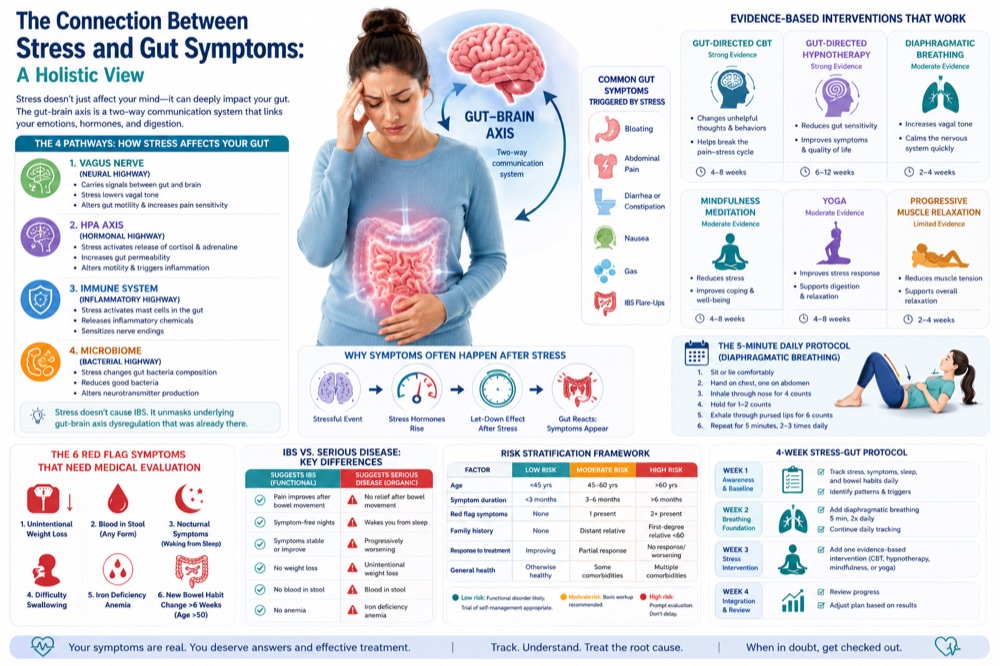
تتحدث القناة الهضمية والعقل باستمرار، فعندما تكون تلك القناة صاخبة، غالبًا ما ينخفض الوضوح أولاً.
يتوقع القرّاء غالباً طعاماً مذنباً واحداً أو فحصاً سحرياً أو مكملاً يفسر كل شيء. التقدّم الحقيقي عادة أكثر هدوءاً.
الهدف ليس روتيناً مثالياً بل خطة قابلة للتكرار لأسبوعين. إذا استمرت الأعراض فاحتفظ بسجل يمكن مشاركته مع الطبيب.
ما يهم أولاً
تقفز مقالات كثيرة إلى الحلول قبل شرح الآلية، فيجرّب القارئ تدخلاً دون أن يعرف كيف يبدو النجاح.
نقطة انطلاق أفضل: سجل النوافذ الضبابية مع الوجبات والنوم والبراز لمدة 14 يومًا قبل مطاردة منشطات الذهن.
- يمكن لضباب ما بعد الوجبة تتبع أنماط الجلوكوز أو فرط نمو البكتيريا في الأمعاء (SIBO) أو الهستامين
- غالبًا ما يشير ضباب الصباح أولاً إلى ديون النوم أو انقطاع التنفس
- كثيرًا ما ينتقل الحمل الالتهابي وأعراض الجهاز الهضمي معًا
- الضباب المستمر أقل شيوعًا في القناة الهضمية فقط
تفاصيل تساعد فعلاً
النموذج الأول
افصل الضباب المرتبط بالأمعاء عن مشاكل النوم والأدوية والمزاج والغدة الدرقية.
اختبار لمدة أسبوعين
استقرار الوجبات والكحول. لاحظ الضباب بعد وجبات محددة.
إطار أسبوعين
-
افعل: ابنِ الوجبات حول أساسيات موثوقة
-
افعل: احمِ النوم والسوائل—يظهران في سجل الأعراض أكثر مما يُتوقع
-
افعل: استخدم تجارب صغيرة ببداية ونهاية واضحتين
-
افعل: عند تفاقم الأعراض اطلب فحصاً مناسباً بدل الارتجال بقوة أكبر
-
لا: لا تجعل وجبة الليل الثقيلة هي الافتراضي
-
لا: لا تبنِ الروتين على شرب كثيف وتتوقع أمعاء هادئة يوم الاثنين
-
لا: لا تفسّر يوماً سيئاً كدليل فشل الخطة كلها
-
لا: لا تقيّد نظامك حتى يبقى خمسة أطعمة فقط
اطلب الرعاية الطبية عند:
- دم في البراز
- ألم يوقظ ليلاً
- فقدان وزن سريع غير مفسر
- قيء مستمر
- براز أسود
- إغماء
قراءات ذات صلة
أسئلة شائعة
هل يعني ضباب الأمعاء دائمًا تسرب الأمعاء؟
لا، إن أنماط التوقيت والتقييم السريري أكثر أهمية من مجرد تسمية شائعة.
المصادر
-
Ford AC, et al. American College of Gastroenterology monograph on the management of irritable bowel syndrome. Am J Gastroenterol. 2024;119(S1):S2-S31.
-
Vasant DH, et al. British Society of Gastroenterology guidelines for the management of irritable bowel syndrome. Gut. 2024;73(7):1027-1058.
-
Mayer EA. Gut Feelings: The Connection Between the Brain and the Digestive System. Penguin Random House. 2024.
-
Camilleri M. Functional gastrointestinal disorders: advances in understanding and management. Lancet. 2024;403(10425):368-382.
-
Giloteaux L, et al. Reduced diversity and altered composition of the gut microbiome in individuals with myalgic encephalomyelitis/chronic fatigue syndrome. Microbiome. 2016;4(1):30.
-
Institute of Medicine. Beyond Myalgic Encephalomyelitis/Chronic Fatigue Syndrome: Redefining an Illness. National Academies Press. 2024.
-
Lomer MCE, et al. Review article: the aetiology, investigation and management of fatigue in inflammatory bowel disease. Aliment Pharmacol Ther. 2023;58(3):269-283.
-
Black CJ, Ford AC. Global burden of irritable bowel syndrome: trends, predictions, and risk factors. Nat Rev Gastroenterol Hepatol. 2024;21(5):323-336.
-
Harvard Health. The gut-brain connection. 2023. https://www.health.harvard.edu/diseases-and-conditions/the-gut-brain-connection
-
NIDDK. Digestive Diseases and Symptoms. 2024. https://www.niddk.nih.gov/
-
CDC. ME/CFS Information for Healthcare Providers. 2024. https://www.cdc.gov/me-cfs/
-
NIH PMC. Gut microbiome and human health review. 2024. https://pmc.ncbi.nlm.nih.gov/articles/PMC10384867/
-
Cleveland Clinic. Brain-Gut Connection. 2024. https://my.clevelandclinic.org/
-
ISAPP. International Scientific Association for Probiotics and Prebiotics Consensus Statement. 2024. https://isappscience.org/
-
Chey WD, et al. ACG Clinical Guideline: Management of Celiac Disease. Am J Gastroenterol. 2024;119(2):203-222.
-
Rezaie A, et al. Hydrogen and Methane-Based Breath Testing in Gastrointestinal Disorders: The North American Consensus. Am J Gastroenterol. 2024;119(5):775-792.