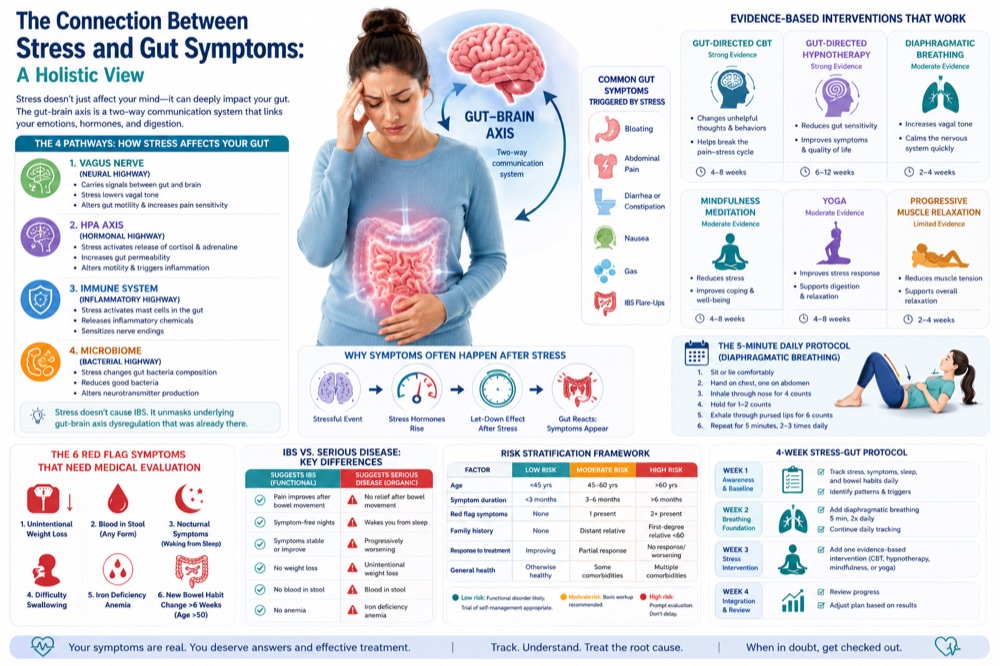
อาการลำไส้ของคุณมีอยู่จริง ความเครียดเปลี่ยนความสามารถในการเคลื่อนไหวและการรับรู้ความเจ็บปวดผ่านวิถีทางที่วัดผลได้
ผู้อ่านมักคาดหวังอาหารตัวร้ายหนึ่งอย่าง การตรวจวิเศษ หรืออาหารเสริมที่อธิบายทุกอย่าง ความก้าวหน้าที่แท้จริงมักเงียบกว่านั้น
เป้าหมายไม่ใช่รูทีนสมบูรณ์แบบ แต่เป็นแผนที่ทำซ้ำได้สองสัปดาห์ หากอาการต่อเนื่อง ให้เก็บบันทึกคุยกับแพทย์ได้
สิ่งสำคัญก่อน
บทความหลายชิ้นกระโดดไปแก้ก่อนอธิบายกลไก ทำให้ผู้อ่านทดลองโดยไม่รู้ว่าความสำเร็จหน้าตาเป็นอย่างไร
จุดเริ่มต้นที่ดีกว่าคือ: เพิ่มการลดระดับลงทุกวันเป็นเวลา 5 นาทีและบันทึกอาการเป็นเวลา 14 วันควบคู่ไปกับรูปแบบมื้ออาหาร
- อาการต่างๆ มักเกิดหลังจากความเครียดถึงจุดสูงสุด ไม่ใช่แค่ในระหว่างนั้นเท่านั้น
- สี่วิถีเชื่อมโยงฮอร์โมนความเครียดกับการทำงานของลำไส้
- เครื่องมือที่ได้รับการสนับสนุนจาก RCT เอาชนะคำศัพท์ด้านสุขภาพได้
- ธงแดงยังคงต้องได้รับการดูแลทางการแพทย์ ไม่ใช่แค่แอปช่วยหายใจเท่านั้น
รายละเอียดที่ช่วยจริง
รายการปฏิบัติ
การหายใจ เดิน หรือสแกนร่างกายสั้นๆ ทุกวัน ไม่ใช่การพักผ่อนสุดสัปดาห์อย่างกล้าหาญ
แบบองค์รวมหมายถึงทั้งสองอย่าง
เครื่องมือทางจิตพร้อมพื้นฐานด้านอาหาร/การนอนหลับ ไม่ใช่เวทมนตร์เพียงอย่างเดียว
กรอบสองสัปดาห์
-
ทำ: จัดมื้อจากฐานที่เชื่อถือได้
-
ทำ: รักษาการนอนและน้ำ—มักโผล่ในบันทึกอาการมากกว่าที่คิด
-
ทำ: ใช้การทดลองเล็ก ๆ ที่รู้จุดเริ่มและจบ
-
ทำ: หากอาการแย่ลง ให้ขอการตรวจที่เหมาะสม ไม่ใช่ทดลองหนักขึ้น
-
อย่า: อย่าให้มื้อดึกหนักเป็นค่าเริ่มต้น
-
อย่า: อย่าสร้างรูทีนรอบการดื่มหนักแล้วหวังลำไส้สงบวันจันทร์
-
อย่า: อย่าถือว่าวันที่แย่เป็นหลักฐานแผนล้มเหลวทั้งชุด
-
อย่า: อย่าจำกัดอาหารเหลือเพียงห้าอย่าง
พบสิ่งเหล่านี้ให้พบแพทย์:
- เลือดในอุจจาระ
- ปวดจนตื่นกลางดึก
- น้ำหนักลดเร็วโดยไม่ทราบสาเหตุ
- อาเจียนต่อเนื่อง
- อุจจาระดำ
- เป็นลม
บทความที่เกี่ยวข้อง
คำถามที่พบบ่อย
“ความเครียด” แปลว่าอาการของฉันเป็นเพียงจินตนาการใช่ไหม?
ไม่ ความเครียดส่งผลต่อสรีรวิทยาของลำไส้อย่างแท้จริง การตรวจสอบและการดูแลแบบทวิภาคี (จิตใจ + ร่างกาย) ได้ผลดีกว่าการเลิกจ้าง
แหล่งอ้างอิง
- Mayer EA. Gut Feelings: The Connection Between the Brain and the Digestive System. Penguin Random House. 2024.
- Lacy BE, et al. Rome Foundation Updated Guidelines for Functional Gastrointestinal Disorders. Gastroenterology. 2024;166(1):38-57.
- Ford AC, et al. American College of Gastroenterology monograph on the management of irritable bowel syndrome. Am J Gastroenterol. 2024;119(S1):S2-S31.
- Vasant DH, et al. British Society of Gastroenterology guidelines for the management of irritable bowel syndrome. Gut. 2024;73(7):1027-1058.
- Black CJ, Ford AC. Global burden of irritable bowel syndrome: trends, predictions, and risk factors. Nat Rev Gastroenterol Hepatol. 2024;21(5):323-336.
- Camilleri M. Functional gastrointestinal disorders: advances in understanding and management. Lancet. 2024;403(10425):368-382.
- Palsson OS, et al. Gut-directed hypnotherapy for irritable bowel syndrome: a systematic review and meta-analysis. Gastroenterology. 2024;166(3):425-437.
- Everitt HA, et al. Cognitive behavioural therapy for irritable bowel syndrome: a systematic review and meta-analysis. Gut. 2024;73(4):612-624.
- Stanghellini V, et al. Abdomino-phrenic dyssynergia in patients with functional bloating and distension. Am J Gastroenterol. 2024;119(3):478-486.
- Varjú P, et al. Management of functional bloating and distension. United European Gastroenterol J. 2024;12(1):15-24.
- Kuo B, et al. Update on the diagnosis and management of chronic constipation. Gastroenterol Hepatol. 2024;20(3):145-156.
- Chey WD, et al. ACG clinical guideline: management of functional dyspepsia. Am J Gastroenterol. 2024;119(7):1189-1208.
- NCCIH. Meditation and Mindfulness: What You Need To Know. 2024.
- Harvard Health. The gut-brain connection. 2023.
- Sperber AD, et al. World Gastroenterology Organisation global guidelines: irritable bowel syndrome. J Clin Gastroenterol. 2024;58(2):107-126.