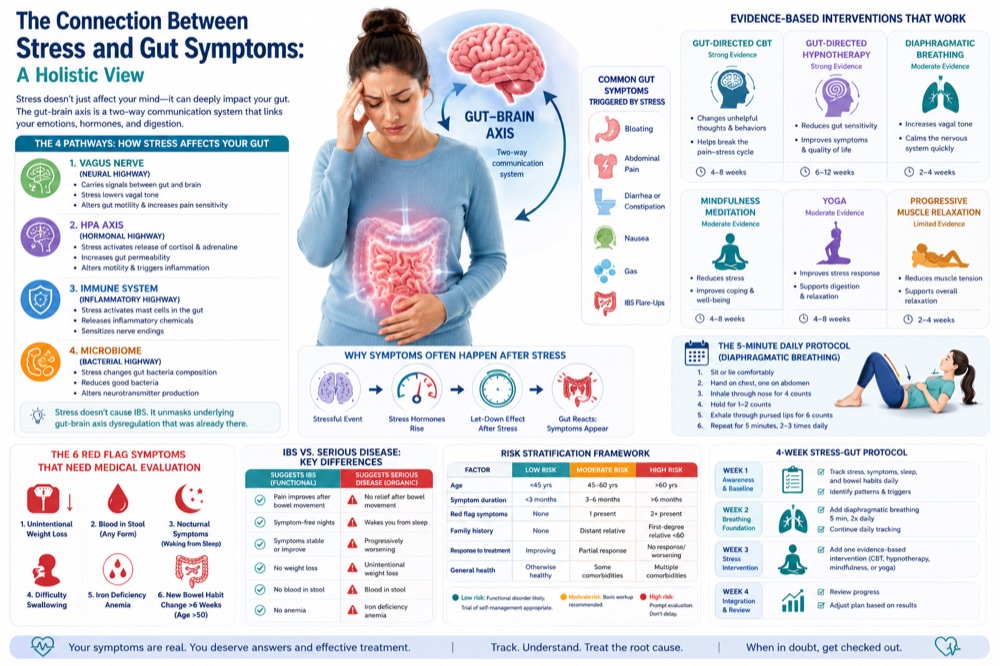
장-뇌 대화가 독해지면 피로가 첫 큰 증상이 되기 쉽습니다.
독자는 범인 음식 하나, 마법 검사, 모든 걸 설명하는 보충제를 기대하기 쉽습니다. 진짜 진전은 더 조용합니다.
목표는 완벽한 루틴이 아니라 2주 반복할 수 있는 계획입니다. 증상이 계속되면 임상의와 공유할 기록을 남기세요.
먼저 중요한 것
많은 글이 메커니즘을 설명하기 전에 바로 해결책으로 뛰어가, 성공이 어떤 모습인지 모른 채 개입을 시도하게 만듭니다.
더 나은 출발점은 이렇습니다. 새 자극제 전에 2주 식사·증상 로그와 수면 보호를 결합하세요.
- 소화기 증상과 피로 동반은 우연보다 많음
- 미주신경 톤 저하와 염증 지표는 동행하기 쉬움
- 장뇌 복합 케어가 단일 성분 과대광고를 이김
- 원인 불명 체중 감소나 흑변은 에너지 핵 문제가 아님
실제로 도움이 되는 세부사항
실무 목록
규칙적 식사, 수분, 이른 취침—그다음 에너지를 평가.
임상 메모
지속 피로는 장 프로토콜만이 아니라 의학적 평가가 필요합니다.
2주 틀
-
하기: 신뢰할 수 있는 기본으로 식사를 구성
-
하기: 수면과 수분을 지키세요. 증상 로그에 예상보다 많이 나옵니다
-
하기: 시작·끝이 분명한 작은 실험을 쓰세요
-
하기: 증상이 악화되는데 더 즉흥적으로 버티지 말고 적절한 검사를 요청하세요
-
하지 않기: 늦은 밤 과식을 기본으로 두지 마세요
-
하지 않기: 과음을 전제로 루틴을 짜고 월요일 잔잔한 장을 기대하지 마세요
-
하지 않기: 힘든 하루를 계획 전체 실패의 증거로 보지 마세요
-
하지 않기: 식단을 다섯 가지로 줄일 만큼 과도하게 제한하지 마세요
다음이 있으면 의료 도움을 받으세요:
- 혈변
- 밤에 깨는 통증
- 급격한 원인 불명 체중 감소
- 지속 구토
- 검은 변
- 실신
관련 글
자주 묻는 질문
장을 고치면 피로가 낫나요?
소화와 수면이 안정되면 편해지는 사람도 있습니다. 그래도 피로 원인은 다양하니 지속되면 진료하세요.
출처
-
Ford AC, et al. American College of Gastroenterology monograph on the management of irritable bowel syndrome. Am J Gastroenterol. 2024;119(S1):S2-S31.
-
Vasant DH, et al. British Society of Gastroenterology guidelines for the management of irritable bowel syndrome. Gut. 2024;73(7):1027-1058.
-
Mayer EA. Gut Feelings: The Connection Between the Brain and the Digestive System. Penguin Random House. 2024.
-
Camilleri M. Functional gastrointestinal disorders: advances in understanding and management. Lancet. 2024;403(10425):368-382.
-
Giloteaux L, et al. Reduced diversity and altered composition of the gut microbiome in individuals with myalgic encephalomyelitis/chronic fatigue syndrome. Microbiome. 2016;4(1):30.
-
Institute of Medicine. Beyond Myalgic Encephalomyelitis/Chronic Fatigue Syndrome: Redefining an Illness. National Academies Press. 2024.
-
Lomer MCE, et al. Review article: the aetiology, investigation and management of fatigue in inflammatory bowel disease. Aliment Pharmacol Ther. 2023;58(3):269-283.
-
Black CJ, Ford AC. Global burden of irritable bowel syndrome: trends, predictions, and risk factors. Nat Rev Gastroenterol Hepatol. 2024;21(5):323-336.
-
Harvard Health. The gut-brain connection. 2023. https://www.health.harvard.edu/diseases-and-conditions/the-gut-brain-connection
-
NIDDK. Digestive Diseases and Symptoms. 2024. https://www.niddk.nih.gov/
-
CDC. ME/CFS Information for Healthcare Providers. 2024. https://www.cdc.gov/me-cfs/
-
NIH PMC. Gut microbiome and human health review. 2024. https://pmc.ncbi.nlm.nih.gov/articles/PMC10384867/
-
Cleveland Clinic. Brain-Gut Connection. 2024. https://my.clevelandclinic.org/
-
ISAPP. International Scientific Association for Probiotics and Prebiotics Consensus Statement. 2024. https://isappscience.org/
-
Chey WD, et al. ACG Clinical Guideline: Management of Celiac Disease. Am J Gastroenterol. 2024;119(2):203-222.
-
Rezaie A, et al. Hydrogen and Methane-Based Breath Testing in Gastrointestinal Disorders: The North American Consensus. Am J Gastroenterol. 2024;119(5):775-792.