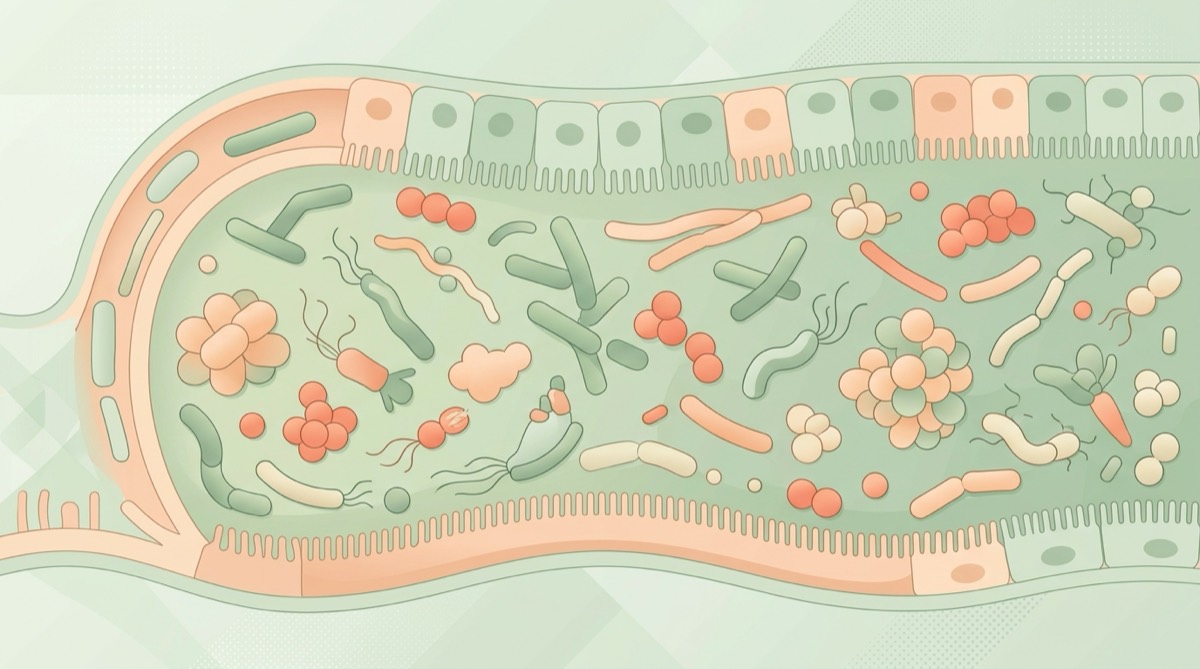
La nebbia mentale non e una diagnosi unica. A volte l intestino contribuisce; a volte comandano sonno o glucosio.
Cosa conta prima
Definite il vostro pattern: post-pasto, mattutino, fine giornata o costante. Poi provate una variabile digestiva alla volta.
- Infiammazione e microbiota possono alterare i segnali al cervello
- Reflusso notturno e sonno frammentato imitano nebbia intestinale
- Pasti pesanti o ricchi di istamina peggiorano in alcune persone
Dettagli che aiutano davvero
Come testare
Semplificate i pasti 2 settimane, proteggete il sonno, riducete alcol e registrate la chiarezza. Senza segnale: valutazione piu ampia.
Il quadro di due settimane
-
Sì: registrare nebbia + pasti
-
Sì: una variabile a settimana
-
Sì: proteggere 7 ore di sonno
-
Sì: rivedere farmaci col clinico
-
No: incolpare sempre solo l intestino
-
No: accatastare nootropi senza base
-
No: ignorare lapnea
-
No: diete di eliminazione eterne
Segnali di allarme — cerca aiuto se:
- perdita di peso inspiegabile
- feci nere
- vomito persistente
- svenimento
- dolore notturno intenso
- sangue nelle feci
Domande frequenti
Come so se e intestinale?
Se migliorare pasti, timing e sonno aiuta, l intestino e plausibile. Se costante con red flag neurologici, priorita alla clinica.
Fonti
-
Ford AC, et al. American College of Gastroenterology monograph on the management of irritable bowel syndrome. Am J Gastroenterol. 2024;119(S1):S2-S31.
-
Vasant DH, et al. British Society of Gastroenterology guidelines for the management of irritable bowel syndrome. Gut. 2024;73(7):1027-1058.
-
Mayer EA. Gut Feelings: The Connection Between the Brain and the Digestive System. Penguin Random House. 2024.
-
Camilleri M. Functional gastrointestinal disorders: advances in understanding and management. Lancet. 2024;403(10425):368-382.
-
Giloteaux L, et al. Reduced diversity and altered composition of the gut microbiome in individuals with myalgic encephalomyelitis/chronic fatigue syndrome. Microbiome. 2016;4(1):30.
-
Institute of Medicine. Beyond Myalgic Encephalomyelitis/Chronic Fatigue Syndrome: Redefining an Illness. National Academies Press. 2024.
-
Lomer MCE, et al. Review article: the aetiology, investigation and management of fatigue in inflammatory bowel disease. Aliment Pharmacol Ther. 2023;58(3):269-283.
-
Black CJ, Ford AC. Global burden of irritable bowel syndrome: trends, predictions, and risk factors. Nat Rev Gastroenterol Hepatol. 2024;21(5):323-336.
-
Harvard Health. The gut-brain connection. 2023. https://www.health.harvard.edu/diseases-and-conditions/the-gut-brain-connection
-
NIDDK. Digestive Diseases and Symptoms. 2024. https://www.niddk.nih.gov/
-
CDC. ME/CFS Information for Healthcare Providers. 2024. https://www.cdc.gov/me-cfs/
-
NIH PMC. Gut microbiome and human health review. 2024. https://pmc.ncbi.nlm.nih.gov/articles/PMC10384867/
-
Cleveland Clinic. Brain-Gut Connection. 2024. https://my.clevelandclinic.org/
-
ISAPP. International Scientific Association for Probiotics and Prebiotics Consensus Statement. 2024. https://isappscience.org/
-
Chey WD, et al. ACG Clinical Guideline: Management of Celiac Disease. Am J Gastroenterol. 2024;119(2):203-222.
-
Rezaie A, et al. Hydrogen and Methane-Based Breath Testing in Gastrointestinal Disorders: The North American Consensus. Am J Gastroenterol. 2024;119(5):775-792.